Authorized request
Your IAM policies
Access checkedBring AdaptCX into your Google Cloud environment with clear responsibilities for identity, networking, encryption and operations.
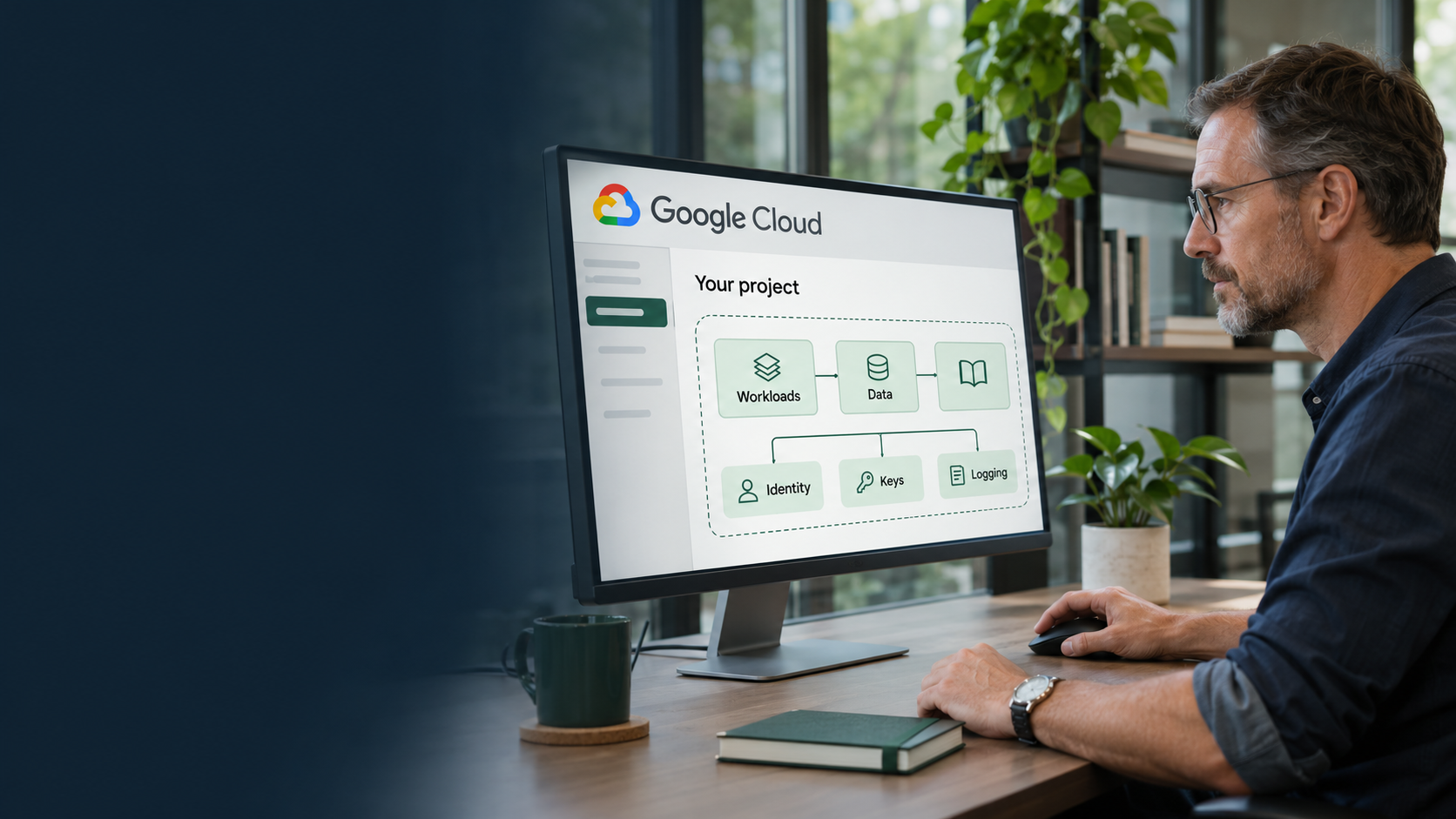
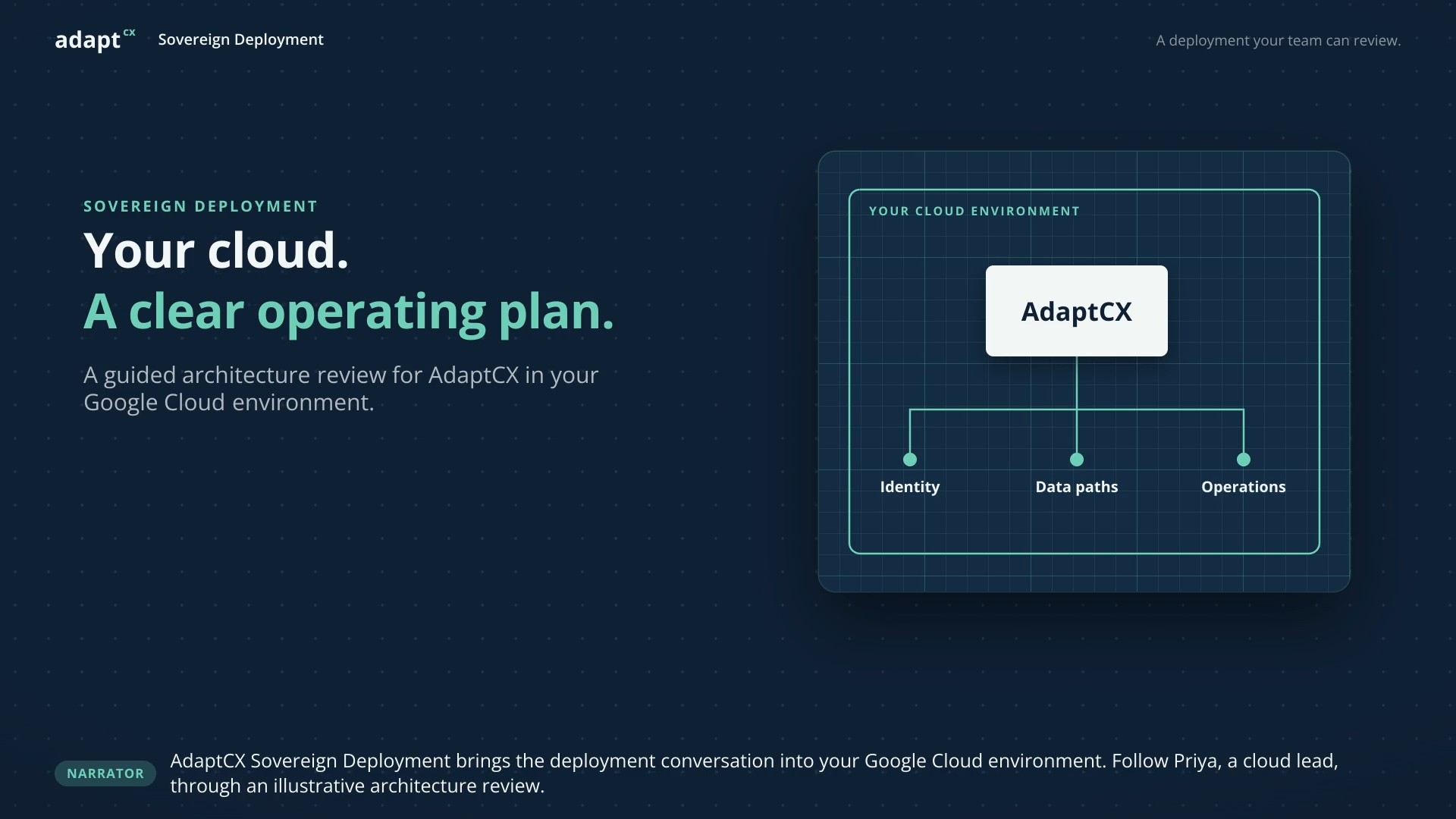
A narrated illustrative architecture review covering application boundaries, data paths and operational responsibilities in a Google Cloud environment.
 A deployment your team can review.1:17 · Watch video
Watch video · 1:17
Narrator: AdaptCX Sovereign Deployment brings the deployment conversation into your Google Cloud environment. Follow Priya, a cloud lead, through an illustrative architecture review. Priya: Before we deploy, I want to see where the application runs and who owns each part. Narrator: Start with the application boundary. Map AdaptCX and its supporting services, then trace the request from identity to application to data. Priya: Access needs clear ownership. We need named roles and permissions for staff, services, and operators. Narrator: Next, review every data path, including AI processing. A project boundary alone does not explain where every service operates. Priya: Let us document the processing locations, key ownership, and which team handles monitoring and recovery. Narrator: The operating plan connects each responsibility to an owner. Proposed changes are reviewed, and the teams agree a release window. Priya: Now we have a concrete design to review, with the open decisions clearly recorded before deployment. Narrator: Your environment. A defined boundary. Clear responsibilities. Explore AdaptCX Sovereign Deployment with your cloud team.
An animated, conceptual deployment.
Not a live system or verified topology.
Your IAM policies
Access checkedApplication boundary
Workload scopedStorage & database
Key controls appliedLogs & operating records
Evidence availableKey ownership and service coverage are part of the architecture review.
Staff and service identities use the permissions configured for your environment. The application does not replace your access decisions.
Illustrative sequence. Service placement, AI processing, network flows and operational responsibilities are defined for each implementation.
The cloud account is only the beginning. The useful question is what your team can inspect, configure and operate.
A useful deployment design identifies the application, its supporting services and each data flow. It gives security reviewers something concrete to examine.
Key ownership, service coverage and rotation responsibilities belong in the design, alongside the permissions that govern access to data.
Release windows, freeze periods and recovery responsibilities belong in the implementation plan. The operating model should fit the work your organization does.
Review the change, agree the window and keep critical periods protected.
Proposed changes available for inspection.
Operational owners align on the rollout.
Hold changes during critical operations.
The application, storage, database and AI services need a service-by-service review. Confirm processing locations, network paths and external dependencies in the proposed topology rather than assuming the project boundary covers every data flow.
Your team and the implementation team agree responsibilities for IAM, key rotation, backups, recovery, monitoring and releases. The architecture session maps those responsibilities to your existing operating model.
No deployment model is a blanket certification. Your security and compliance reviewers assess the configured services, access controls, data handling and required agreements against your requirements.